Features / Tasks board

The jobs are on a board. So is everything else.

Chasing a file, ringing a customer back, ordering filament, booking a courier. In most shops that work lives in someone’s head. Here it is a record with a due date, an owner and a link to the job it is about — and most of it is raised for you.

The board

The jobs are on a board. So is everything else.

A print shop does not only make parts. Somebody has to chase a file, ring a customer back, order filament, book a courier and remember that the spool on machine four is nearly out. Those live in a head, a sticky note or a group chat, and that is where they are lost. Tasks are a first-class record next to the orders, with a due date, an owner and, where it matters, a link straight to the job they are about.

  • Open, due today and overdue counted on the navigation itself, so nothing waits to be noticed
  • A task can point at an order or a customer — open it and you are looking at the job, not searching for it
  • Your own sections, in your own order, because no two shops group work the same way
  • Complete, reopen, reassign and delete, all recorded in the audit log
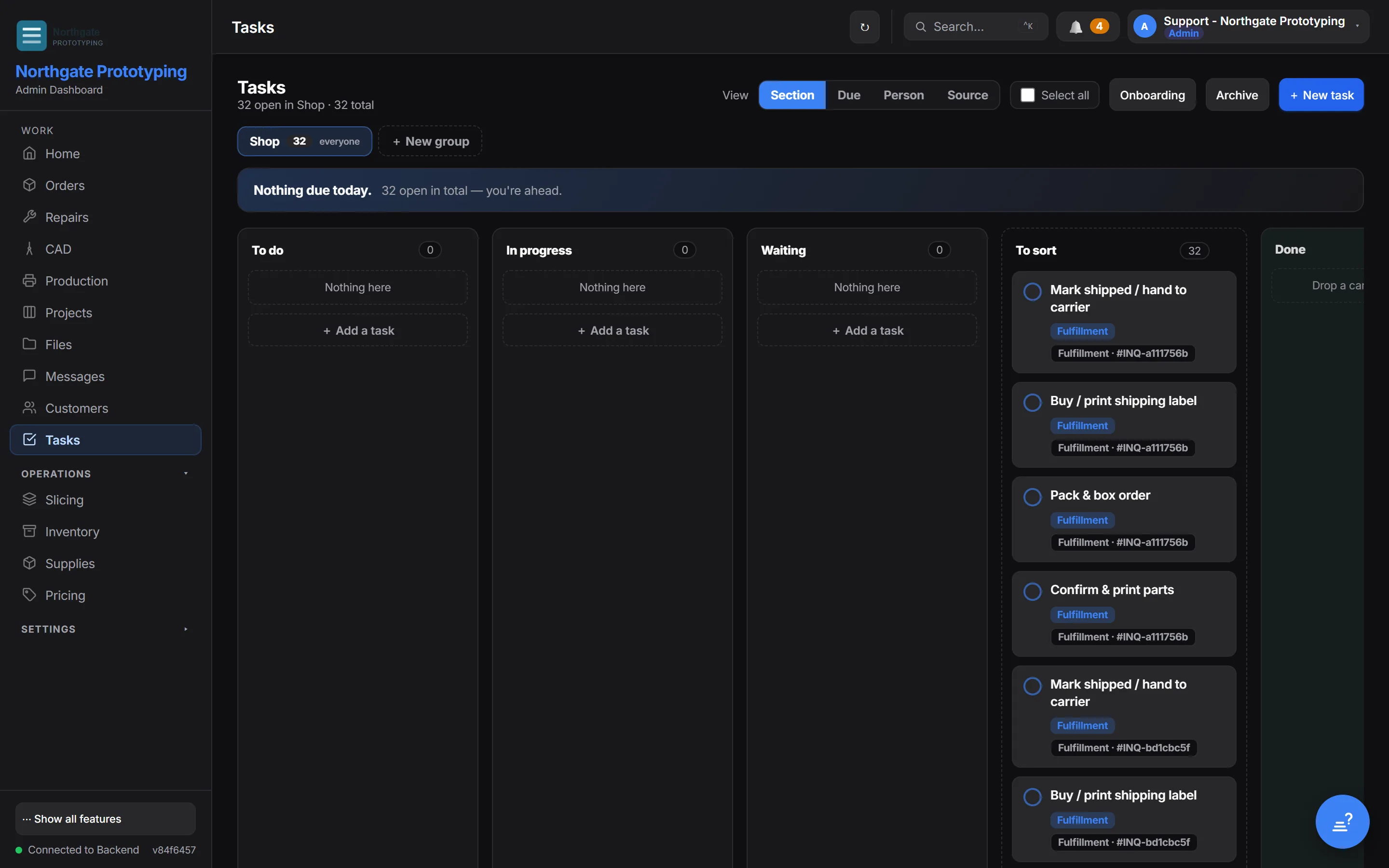
The Tasks page with a group selector, view options by section, due date, person and source, an onboarding checklist and the count of open tasks.

Groups

Sales does not need to see the filament order.

Groups are domains of work, and access follows membership rather than job title — because in a five-person shop everybody is an admin and roles decide nothing.

Open

A group with no members

Shared with the whole shop. The default, and the right answer most of the time.

Members only

A group with members

Only they see it. Whoever assigns the first member is added too, so nobody can lock themselves out of their own group.

System

The machine-generated stream

Everything the software raises itself lands here and everyone can see it. A service that creates a task never has to know groups exist.

Raised for you

The ones you did not write are the ones that matter.

Most of what belongs on this board is something the software already knows. A quote that has gone quiet past its promise, an order sitting on a stage longer than your own service level allows, a file that never arrived, a follow-up the engine has stood down on and handed back to a person. Each becomes a task with the reason attached, in the system group, where the whole shop can see it.

  • Service-level breaches raise a task naming the order and how long it has been there
  • A snoozed job wakes up as a task on the day you said, not as a silent status
  • The onboarding checklist for a new shop is the same mechanism — setup is just work with an owner
  • Nothing here emails a customer. A task is a nudge to a person; sending is always a separate, deliberate act

How follow-ups decide when to stand down →

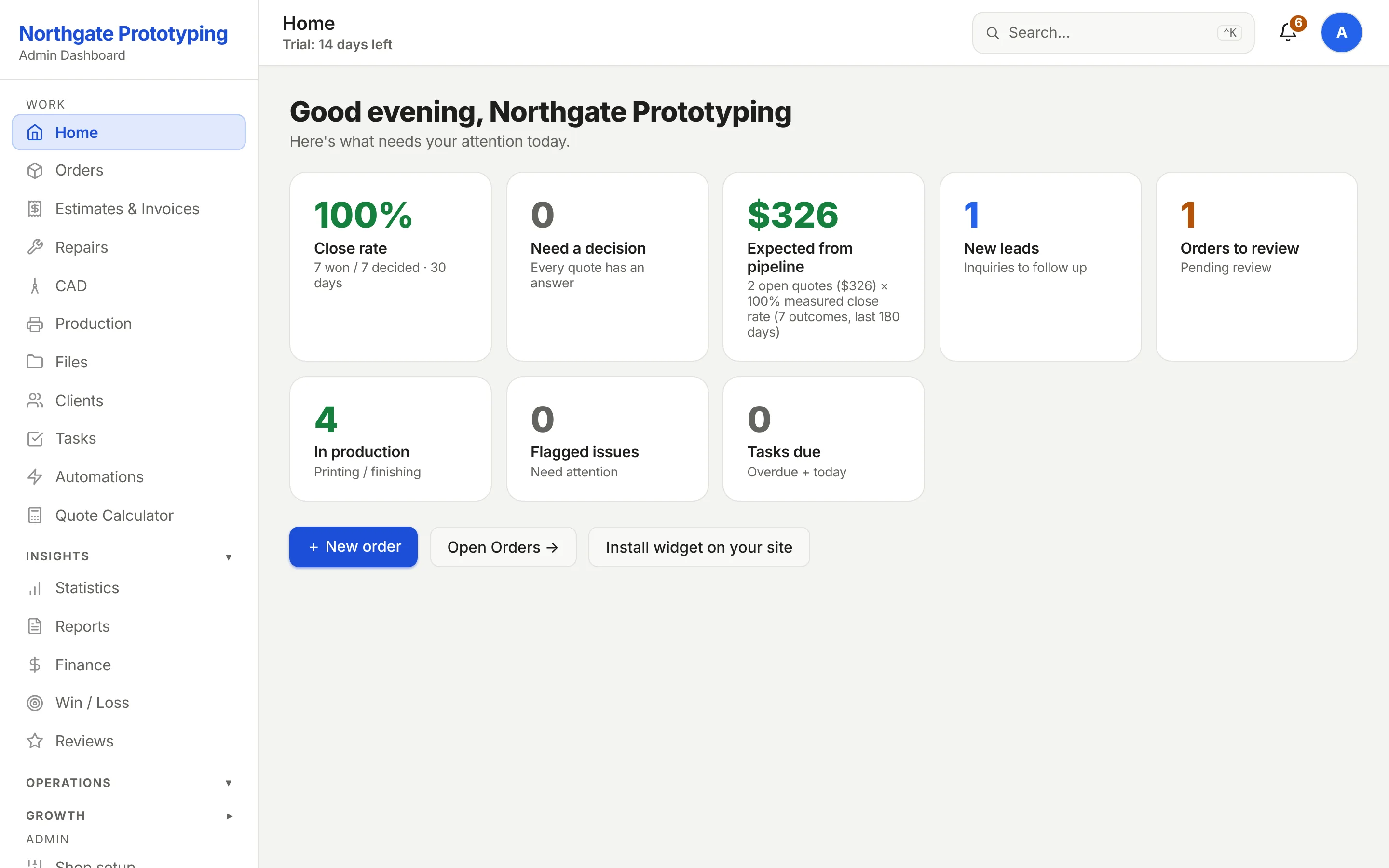
The admin dashboard with the day's counts, jobs needing attention and the open task total in the navigation.

Put your sticky notes in it for a fortnight.

Founding Shops get Professional at CA$119.20 a month for their first year. If it does not hold everything you were remembering by hand, you have lost nothing.

Become a Founding Shop